
Clariant Opens Two Additive R&D Laboratories in China
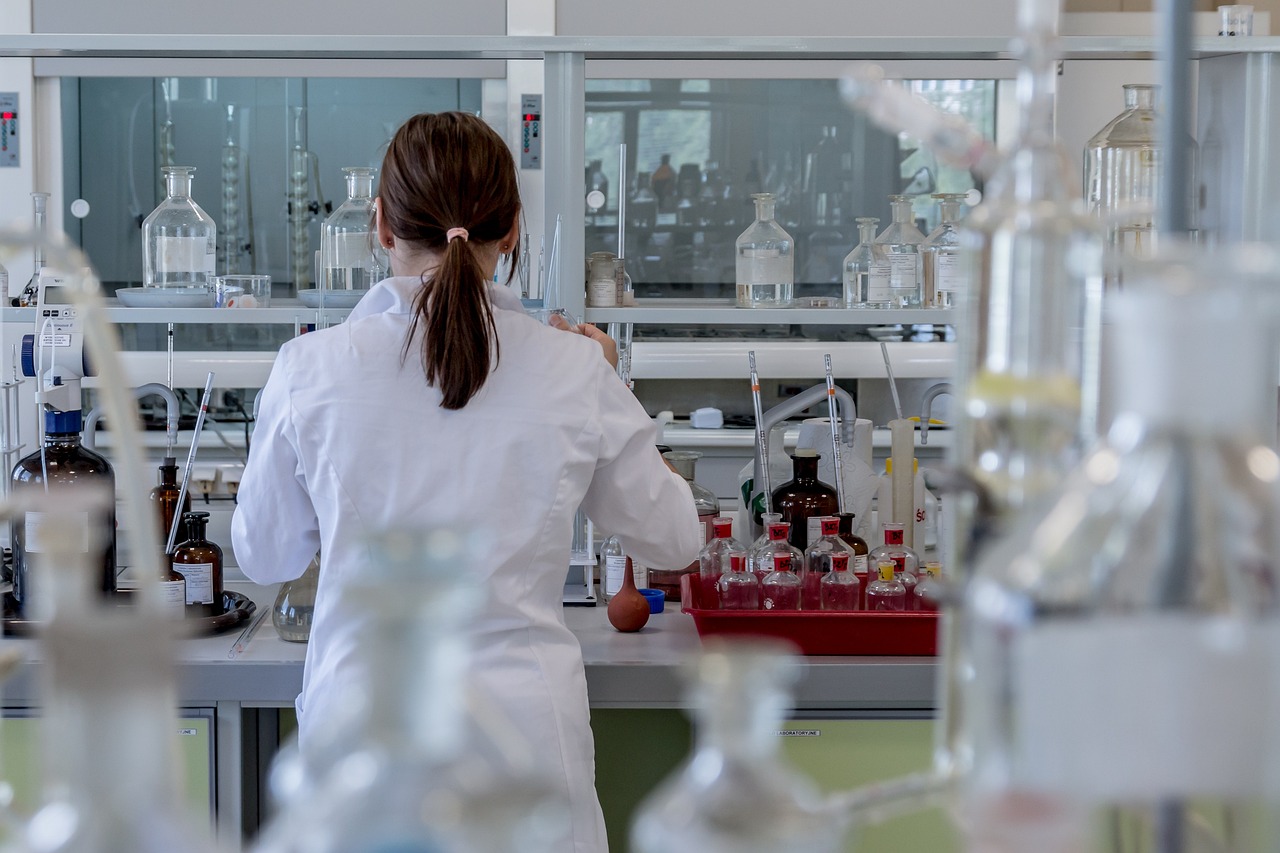
Clariant has opened two research and development laboratories in China for its additives business, and for the first time the Swiss specialty chemicals group can synthesise flame retardants and performance additives locally rather than developing them elsewhere and adapting them for the region. The two sites put early research, pilot-scale synthesis and analytical work in the same country as a large part of the customer base.
The Two Locations
The laboratories are located at the company's Daya Bay production base in Huizhou and at One Clariant Campus in Shanghai. They are not copies of each other; each carries a defined technical remit. The Huizhou laboratory sits inside Clariant's high-performance flame retardant plant and concentrates on next-generation flame retardant products.
The Shanghai laboratory is housed within the group's existing additives technology centre and works on performance additives, including antioxidants, light stabilisers and waxes. Both facilities are staffed with research professionals recruited specifically for their respective fields, which is a practical detail rather than a formality. Synthesis work depends on people who know the chemistry of a narrow product family, and a team of that kind cannot be assembled quickly.
From Application Work to Synthesis
Clariant frames the investment as a step beyond the local application development work it already carried out in China. Application support answers questions about how an existing product behaves in a customer's process. Local synthesis answers a different question: whether a molecule or a formulation can be made to fit a requirement that the existing portfolio does not cover.
The new laboratories cover the chain from early research through to pilot scale. In Huizhou that means atmospheric and high-pressure synthesis reactors; in Shanghai it means pilot-scale polycondensation facilities alongside synthesis and analytical capability. Pilot scale is the step that most often decides whether a promising bench result reaches a customer, because it is where a route is tested for reproducibility rather than for feasibility.
The company expects the arrangement to shorten development cycles, bring it closer to customers in China and the wider Asia-Pacific region, and accelerate the path of new solutions into global markets. Those three outcomes are connected: a shorter local cycle produces more iterations, more iterations produce more data, and data is what a customer's qualification process consumes.
Analytical Depth
The Huizhou laboratory is equipped with atmospheric and high-pressure synthesis reactors alongside a set of analytical instruments, including thermogravimetric analysis, differential scanning calorimetry, X-ray fluorescence, gas chromatography and ion chromatography. Instrumentation of this kind determines how fast a development programme can move. A synthesis without characterisation yields a sample; a synthesis with characterisation yields an understanding of what to change next.
The laboratory is also set up to support external collaboration with Chinese universities and innovation partners, which extends the range of problems the site can take on without duplicating every capability in house.
A Wider China Footprint
The two laboratories form the latest layer in a local innovation ecosystem Clariant has been building in China. In November 2025 the company announced a joint venture with Fuhua to develop next-generation phosphorus-based flame retardants. In the same month, the second production line at its Cangzhou joint venture with Beijing Tiangang came on stream, producing the Nylostab S-EED multifunctional additive for China's nylon industry.
The Daya Bay flame retardant plant that hosts one of the new laboratories was completed in 2023 and expanded with a second production line in November 2025, bringing total investment at the site to CHF 100 million. Read together, the sequence shows a supplier building production, joint ventures and now research in the same geography, rather than treating China as a sales territory with technical support attached.
What It Signals
These additives sit outside lubricant formulation, but the pattern is relevant to anyone buying additives in Asia. Local synthesis combined with local pilot capacity is what allows a supplier to respond to a regional specification change in months rather than in shipping cycles.
It also changes the practical shape of technical support. A compatibility question that previously travelled to a development centre in another time zone can be tested locally, and a modified sample can arrive without a customs and freight interval attached. That capability is becoming a competitive criterion in Asia across additive categories, and not only in flame retardants.
For buyers, the test of an announcement like this is what changes in the working relationship: how quickly a sample can be supplied, how much supporting data comes with it, and whether the local team can answer a technical question without escalation.
Bottom line
Clariant's two Chinese laboratories are a capability announcement rather than a product one, and capability is the part that compounds. The commercial value will show up in sampling speed, reformulation cycles and documentation depth rather than in a launch date. Where local research and pilot scale are genuinely connected, regional supply stops depending on a distant development centre.
Related news
Afton Launches Heavy-Duty Additive Platform for API CL-4 and FB-4
Afton Chemical has introduced a new generation of heavy-duty engine oil additive technology built for the upcoming API CL-4 and FB-4 categories, known during development as PC-12A and…
Read more
Lubrizol Begins CV1700 Shipments Ahead of API CL-4 Licensing
Lubrizol has launched the CV1700 series, a heavy-duty engine oil additive solution developed for the next generation of API diesel specifications, and has begun shipping in North America…
Read more
NewMarket Reports Higher H1 Profit on Petroleum Additive Strength
NewMarket has reported higher earnings for both the second quarter and the first half of 2026, with its petroleum additives business carrying the improvement. The Virginia-based specialty chemicals…
Read more